Sunday, August 21, 2011

Platelet Rich Plasma Paper compares Biomet GPS vs Arthrex ACP

Bloodcure has long stated that platelet rich plasma composition matters.  A new study just published by Dr. Lisa Fortier's group at Cornell compares two of the most popular PRP systems:  Biomet and Arthrex.  It is clear these two PRP systems have significantly different bioactivity.  


"PRP-1 (Arthrex) system consisted of concentrated platelets (1.99×) and diminished leukocytes (0.13×) compared with blood, while PRP-2 (Biomet GPS) contained concentrated platelets (4.69×) and leukocytes (4.26×) compared with blood. Growth factors were significantly increased in PRP-2 (Biomet) compared with PRP-1 (Arthrex) (TGF-β1: PRP-2 = 89 ng/mL, PRP-1 = 20 ng/mL, P < .05; PDGF-AB: PRP-2 = 22 ng/mL, PRP-1 = 6.4 ng/mL, P < .05). The PRP-1 (Arthrex) system did not have a higher concentration of PDGF-AB compared with whole blood. Catabolic cytokines were significantly increased in PRP-2 (Biomet) compared with PRP-1 (MMP-9: PRP-2 = 222 ng/mL, PRP-1 = 40 ng/mL, P < .05; IL-1β: PRP-2 = 3.67 pg/mL, PRP-1 = 0.31 pg/mL, P < .05)."  
See Full Abstract


This important work helps to highlight that different types of PRP exist and should be recognized by patients, clinicians and researchers.  A PRP classification system also has been published based cellular composition.  See Classification System

AM 

Monday, July 25, 2011

DNA Sequencing or Magnetic Resonance Imaging MRI

Today, one of the most common tests ordered in the United States is a Magnetic Resonance Image or MRI.  These images are typically ordered of a specific body part or region.  The cost of this type of test is variable ranging from $800 to over $3000 and produces exquisite information anatomic images.  

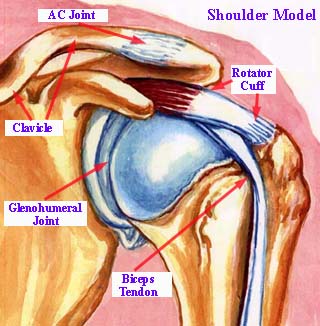
MRI of Torn Rotator Cuff

An MRI, however, gives the clinician no information about the patients systemic physiology or potential underlying risk factors.  If DNA sequencing can follow Moore's Law from computer science, then the cost should drop to $1000 within five years or perhaps less.  Databases are already being created with numbers reaching over 100,000 patients.  As the cost drops, physicians will begin ordering these tests almost as often as MRIs and we will then see dramatic shifts in the practice of medicine.  The natural history (what happens if no intervention occurs) is different for different patients.  We may be able to predict with DNA sequencing who will recover WITHOUT any specific or expensive treatment.  We also may be able to predict which patients will require aggressive treatment.  The era of personalized genomic medicine will have arrived.  This has broad implications for reducing the cost of care if implemented appropriately. 

Read more about the falling cost of DNA sequencing in the LA Times. 

AM


Saturday, July 16, 2011

Kobe Bryant, Tiger Woods and Platelet Rich Plasma

According to published reports, Kobe Bryant has had three arthroscopic (scopes) surgeries on his right knee.  (2003, 2006 and 2010)  This is similar to the three surgeries that Tiger Woods has had on his left knee.  Both of these athletes are in their 30s and the question for both of them is:  What is going on inside these elite knee joints and why did they both turn to platelet rich plasma to potentially help them?


BLOODCURE thinks it is safe to assume that both of them have some arthritic changes in their knees.  This means that they have lost some of both the smooth cartilage covering the bone (articular cartilage) and some of the cushioning cartilage between the thigh and shin bones (meniscus cartilage).  In Tiger's case, he may have been treated for patellar tendonitis after an ACL reconstruction but there is no presented or published information about the specifics of his treatment.  In Kobe's case, he may have been treated for knee arthritis but despite BLOODCURE contacting its many sources in the USA and Europe, no one has come forward with specific information about his treatment.  What did he have done and why did he travel to Germany to get it done?  Plenty of physicians within the USA and specifically California have experience with PRP.  So, did he get some form of PRP that is not available in the USA?

Answers to these questions will help us all better understand the value of PRP for iconic professional athletes and for sports medicine in general.  Importantly, we also need to learn what type of PRP (many exist) they received.  Here is a video of a PRP Classification System.  

If anyone has information about these cases, please post a comment below.

AM
Total Tendon.com

Saturday, June 11, 2011

AAOS Now Reports on Platelet Rich Plasma


AAOS NOW just published a discussion about what's behind the hype of platelet rich plasma  Read an excerpt below:  
--------------------------------------------------------------------------------------------------------------------------------


"Dr. Mishra also presented a concise classification system for PRP formulations (See Video of PRP Classification) to help compare data from various studies. The system takes into account the inclusion of white blood cells, the addition of a thrombin activator, and the final concentration of platelets.
He noted that PRP is “autologous engineering” a way to help maximize how the body helps heal itself. Stem cells and bone marrow are other examples.
“Patients are seeing elite athletes, like Tiger Woods and Raphael Nadal, being treated with some form of PRP and are asking their orthopaedic surgeons to give them ‘what Tiger got.’ The problem is that we don’t know ‘what Tiger got,’ what happened to him before or afterwards, or what was used, and no one is publishing that data,” noted Dr. Mishra.
“But all three major sports organizations—the National Football League (NFL), Major League Baseball, and the National Basketball Association—as well as the World Anti-Doping Agency, have declared that PRP is a reasonable treatment, despite the fact that we may all agree that there’s limited research to support the efficacy of its use,” he continued.


Read the full article.
------------------------------------------------------------------------------------------------------------------------------------
Clearly, PRP needs more evidence to be fully validated.  This will require investigation of specific PRP formulations and specific indications with important but expensive large randomized trials.  Athletes in general, however, do not wait until there is definitive proof.  They are constantly searching for the best ways to recover from injuries and PRP has increasing evidence that it may help.

Wednesday, June 01, 2011

Platelet Rich Plasma Classification Video

This is a Platelet Rich Plasma Classification System proposed by Dr. Allan Mishra at the American Academy of Orthopedic Surgery (AAOS) in San Diego Feb. 2011


AM
Total Tendon.com

Wednesday, May 18, 2011

New Study shows PRP improves Rotator Cuff Repair Outcomes

Dr. Pietro Randelli and his colleagues just published a prospective randomized trial on the use of platelet rich plasma for rotator cuff repair surgery.  He showed a specific type of PRP (Increased platelets in combination with white blood cells) improved outcomes especially within the first 30 days.


Platelet rich plasma in arthroscopic rotator cuff repair: a prospective RCT study, 2-year follow-up.
Authored By: Randelli PietroArrigoni PaoloRagone VincenzaAliprandi AlbertoCabitza Paolo
Department of Scienze Medico Chirurgiche, University of Milano, IRCCS Policlinico San Donato, Milano, Italy.
Pub Date: 06/2011Source/Vol: Journal of shoulder and elbow surgery / American Shoulder and Elbow Surgeons ... [et al.]/20
Hypothesis  Local application of autologous platelet rich plasma (PRP) improves tendon healing in patients undergoing arthroscopic rotator cuff repair.

Study Design  Prospective, randomized, controlled, double blind study; considering an alpha level of 5%, a power of 80%, 22 patients for group are needed.

Materials And Methods  Fifty-three patients who underwent shoulder arthroscopy for the repair of a complete rotator cuff tear were randomly divided into 2 groups, using a block randomization procedure. A treatment group (N = 26) consisted of those who received an intraoperative application of PRP in combination with an autologous thrombin component. A control group (N = 27) consisted of those who did not receive that treatment. Patients were evaluated with validated outcome scores. A magnetic resonance image (MRI) was performed in all cases at more than 1 year post-op. All patients had the same accelerated rehabilitation protocol.

Results  The 2 groups were homogeneous. The pain score in the treatment group was lower than the control group at 3, 7, 14, and 30 days after surgery (P < .05). On the Simple Shoulder Test (SST), University of California (UCLA), and Constant scores, strength in external rotation, as measured by a dynamometer, were significantly higher in the treatment group than the control group at 3 months after surgery (strength in external rotation [SER]: 3 ± 1.6 vs 2.1 ± 1.3 kg; SST: 8.9 ± 2.2 vs 7.1 ± 2.7; UCLA: 26.9 ± 3 vs 24.2 ± 4.9; Constant: 65 ± 9 vs 57.8 ± 11; P < .05). There was no difference between the 2 groups after 6, 12, and 24 months. The follow-up MRI showed no significant difference in the healing rate of the rotator cuff tear. In the subgroup of grade 1 and 2 tears, with less retraction, SER in the PRP group was significant higher at 3, 6, 12, and 24 months postoperative (P < .05).

Conclusion  The results of our study showed autologous PRP reduced pain in the first postoperative months. The long-term results of subgroups of grade 1 and 2 tears suggest that PRP positively affected cuff rotator healing.
Copyright © 2011 Journal of Shoulder and Elbow Surgery Board of Trustees. Published by Mosby, Inc. All rights reserved.
Publication Types: Journal Article
PubMed Link:http://www.ncbi.nlm.nih.gov/pubmed/21570659

Wednesday, May 04, 2011

World Wide Regenerative Medicine Leader?

Regenerative Medicine is exploding worldwide.  There is a healthy debate emerging about who is in the lead.  Is it North America  (USA, Canada), Europe, South America, Australia or Asia?  Could Africa be the place of a monumental discovery discovery much like when Christiaan Barnard did the first heart transplant in Cape Town in 1967?

Countries and continents are taking vastly different approaches to stem cell treatments, genetic engineering and other forms of regenerative medicine.  Regulatory issues are especially different by country and changing rapidly.    It is also difficult to keep track of all the trials that are popping up everyday.

Send in your comments or follow bloodcure on twitter to be part of the conversation.


Follow bloodcure on Twitter

AM

Sunday, April 24, 2011

Regenerative Medicine Treatment Value Equation

Regenerative medicine is a buzz phrase right now.  Patients, providers and politicians are all in favor of "Regenerative Medicine".  There are three major components to evaluate when assessing treatment value (TV).  Treatment value is directly related to overall efficacy (E) of the drug or procedure and inversely related to cost (C) and risk (R).  A simple equation can define it:

TV = E / C x R2

That is Treatment Value = Efficacy divided by Cost times Risk squared.

We need treatments of high value with maximal efficacy that have reasonable costs and minimal risks.  When evaluating new potential "Regenerative Medicine Treatments", consider this equation.

Please post any comments or suggestions.

AM
ApexPRP.com

Wednesday, March 23, 2011

Level One Two Year Follow Up Paper Supports Use of Platelet Rich Plasma for Tennis Elbow

Dr. Taco Gosens and his team from the Netherlands have just published in the American Journal of Sports Medicine the best paper to date on the use of platelet rich plasma for tennis elbow.  Using the Biomet GPS device to create platelet rich plasma (Type 1A PRP in Mishra's classification system of PRP), they found PRP patients were successfully treated more often than patients treated with corticosteroid injections at two year follow up.  This was highly statistically significant at a p value of < 0.0001. 
Read the entire abstract here.

This paper confirms that a specific type of PRP is better than the often used cortisone injection for chronic lateral epicondylar tendinopathy.  This team of researchers also needs to be congratulated on finishing this important work. 

AM
Total Tendon
http://www.twitter.com/bloodcure

Friday, February 18, 2011

AAOS Now PRP Forum

AAOS Now reported on the recent platelet rich plasma forum in San Diego.


"The participants of the 2011 PRP Forum also endorsed the development of standards in the manufacture of PRP, noted that PRP may be contraindicated in some conditions, and called for the establishment of a study group to follow up on the other recommendations resulting from the session."
  
"At the end of the day, an informal survey of participants found most in agreement that PRP would be an option, particularly if conservative treatments have failed and the next step would be surgery."


The group agreed that PRP needs a classification system.  Dr. Allan Mishra proposed one that is under consideration.


AM

Monday, February 14, 2011

Platelet Rich Plasma Forum at AAOS

The American Academy of Orthopaedic Surgery and AAOS Now will be conducting a Platelet Rich Plasma Forum on February 14, 2011 just prior to the Annual Meeting in San Diego.  Participating in this meeting are an elite group of clinicians and researchers including but not limited to Dr. James Andrews, Dr. Steven Arnoczky, Dr. Terry Canale, Dr. William Clancy, Dr. Freddie Fu, Dr. Taco Gosens, Dr. Elizaveta Kon, Dr. Nicola Maffulli, Dr. Robert Marx, Dr. Allan Mishra, Dr. Pietro Randelli, Dr. Scott Rodeo, and Dr. JR Woodall.

This group along with several others has been tasked with evaluating the state of platelet rich plasma.  It will be the most comprehensive discussion of the topic with regard to orthopedics and sports medicine.  The goal is to hopefully make some sense of how to best evaluate and potentially use PRP.

Stay tuned for details.

AM
HalfDome.TV
Fitness/Sports Medicine Videos (4 million views)

Patient Application Form