 |
| PRP being added to an Achilles Tendon Repair |
Showing posts with label repair. Show all posts
Showing posts with label repair. Show all posts
Tuesday, March 10, 2015
PRP enhances healing after Achilles Tendon Rupture


Tuesday, December 09, 2014
Microfracture Surgery Jadaveon Clowney
The Houston Texans' Jadeveon Clowney recently underwent "microfracture" surgery on his ailing right knee. (See ESPN report)
The report suggests the talented Mr. Clowney will be out for 9 months or more. Just what is microfracture surgery and why does it take as long to recovery as it does for a baby to born?
Let's start with the basics. There are two types of cartilage in the knee. The surface cartilage which covers the bone. This is known as articular cartilage and can be thought of a type of cap or covering of the end of the bone. This cartilage is present in any joint. In the knee, there is another type of cartilage, the meniscus cartilage. There are two menisci in the knee--medial (inside) and lateral (outside). When the surface "articular" cartilage is damaged, the knee can become quite painful especially with loading and twisting. Think rushing a passer for example. Similar symptoms can occur when the meniscus is torn. It is often difficult to distinguish between the two in terms of which one is the pain generator.
Microfracture surgery is an attempt to create a tire patch over a cartilage defect by poking a hole in the end of the bone and creating an access channel to the bone marrow. The bone marrow then leaks out via the holes that are created and forms a clot which over time can help cover the defect. It takes time, many months, for this surgery to work because the "patch" needs to mature. This technique is useful for small defects in the cartilage but hasn't proven to be great for larger defects. We do not know the size of Mr. Clowney's knee cartilage injury.
Recent evidence suggests that the addition of platelet-rich plasma can enhance microfracture surgery results. This has been shown in basic science, preclinical and now clinical studies.
This type of surgery at such a young age is clearly not a good sign. In the long run, he may require further intervention. Please read the post below for further information about why we need to accelerate our regenerative medicine efforts. Mr. Clowney is one of tens of millions of people worldwide with symptomatic cartilage damage. We need to maximize outcomes of today's surgical techniques and develop new procedures to help keep our athletes and patients in the game.
AM
TotalTendon
The report suggests the talented Mr. Clowney will be out for 9 months or more. Just what is microfracture surgery and why does it take as long to recovery as it does for a baby to born?
 |
| Microfracture Surgery |
Microfracture surgery is an attempt to create a tire patch over a cartilage defect by poking a hole in the end of the bone and creating an access channel to the bone marrow. The bone marrow then leaks out via the holes that are created and forms a clot which over time can help cover the defect. It takes time, many months, for this surgery to work because the "patch" needs to mature. This technique is useful for small defects in the cartilage but hasn't proven to be great for larger defects. We do not know the size of Mr. Clowney's knee cartilage injury.
Recent evidence suggests that the addition of platelet-rich plasma can enhance microfracture surgery results. This has been shown in basic science, preclinical and now clinical studies.
This type of surgery at such a young age is clearly not a good sign. In the long run, he may require further intervention. Please read the post below for further information about why we need to accelerate our regenerative medicine efforts. Mr. Clowney is one of tens of millions of people worldwide with symptomatic cartilage damage. We need to maximize outcomes of today's surgical techniques and develop new procedures to help keep our athletes and patients in the game.
AM
TotalTendon
Thursday, February 14, 2013
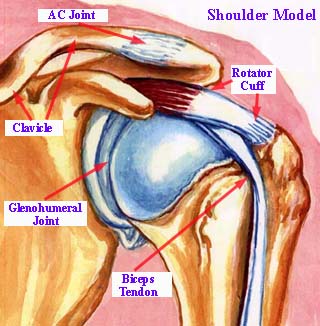
Stem Cells from the Rotator Cuff and Biceps Tendon
In a landmark study, Dr. Pietro Randelli and his colleagues found a population of cells within the rotator cuff and biceps tendon with stem cell like "characteristics (ie, they were self-renewing in vitro, clonogenic, and multipotent), as they could be induced to differentiate into different cell types-namely, osteoblasts, adipocytes, and skeletal
muscle cells."
The full implications of this paper are difficult to predict but this work could enable entirely new approaches to tendon repair within and outside of the shoulder. The authors should be congratulated on this truly important work. See the full abstract below for details.
AM
Total Tendon
AM
Total Tendon
Am J Sports Med. 2013 Feb 7. [Epub ahead of print]
Isolation and Characterization of 2 New Human Rotator Cuff and Long Head of Biceps Tendon Cells Possessing Stem Cell-Like Self-Renewal and Multipotential Differentiation Capacity.
Randelli P, Conforti E, Piccoli M, Ragone V, Creo P, Cirillo F, Masuzzo P, Tringali C, Cabitza P, Tettamanti G, Gagliano N, Anastasia L.
The following toggler user interface control may not be accessible. Tab to the next button to revert the control to an accessible version.
Destroy user interface control
Source
IRCCS Policlinico San Donato, San Donato Milanese, Italy.
Abstract
BACKGROUND:Stem cell therapy is expected to offer new alternatives to the traditional therapies of rotator cuff tendon tears. In particular, resident, tissue-specific, adult stem cells seem to have a higher regenerative potential for the tissue where they reside. HYPOTHESIS:Rotator cuff tendon and long head of the biceps tendon possess a resident stem cell population that, when properly stimulated, may be induced to proliferate, thus being potentially usable for tendon regeneration. STUDY DESIGN:Controlled laboratory study. METHODS:Human tendon samples from the supraspinatus and the long head of the biceps were collected during rotator cuff tendon surgeries from 26 patients, washed with phosphate-buffered saline, cut into small pieces, and digested with collagenase type I and dispase. After centrifugation, cell pellets were resuspended in appropriate culture medium and plated. Adherent cells were cultured, phenotypically characterized, and then compared with human bone marrow stromal cells (BMSCs), as an example of adult stem cells, and human dermal fibroblasts, as normal proliferating cells with no stem cell properties. RESULTS:Two new adult stem cell populations from the supraspinatus and long head of the biceps tendons were isolated, characterized, and cultured in vitro. Cells showed adult stem cell characteristics (ie, they were self-renewing in vitro, clonogenic, and multipotent), as they could be induced to differentiate into different cell types-namely, osteoblasts, adipocytes, and skeletal muscle cells. CONCLUSION:This work demonstrated that human rotator cuff tendon stem cells and human long head of the biceps tendon stem cells can be isolated and possess a high regenerative potential, which is comparable with that of BMSCs. Moreover, comparative analysis of the sphingolipid pattern of isolated cells with that of BMSCs and fibroblasts revealed the possibility of using this class of lipids as new possible markers of the cell differentiation status. CLINICAL RELEVANCE:Rotator cuff and long head of the biceps tendons contain a stem cell population that can proliferate in vitro and could constitute an easily accessible stem cell source to develop novel therapies for tendon regeneration.
Wednesday, May 09, 2012
Systematic Analysis reveals Platelet Rich Plasma improves Rotator Cuff Repair Surgery
Improving the healing rates for rotator cuff repair surgery has been an important goal in orthopedic surgery for years. Recently, platelet rich plasma has been proposed as a potential biologic adjuvant to rotator cuff repair. Several studies have been published on the topic with conflicting results. This data variability can be traced to the variety of PRP formulations being used and the types of tears being repair.
Recent, Brian Cole and his colleagues at Rush, released information about a systematic analysis of the PRP rotator cuff literature. "Their review revealed that the re-tear rate for small and medium tears treated at the time of surgery with PRP was 7.9 percent, compared to a re-tear rate of 26.8 percent when PRP was not used. The results will be published in the Journal of Arthroscopy this summer.
We are still at the beginning of understanding how to use PRP for rotator cuff repairs. This review, however, clearly suggest PRP may be of value for small or medium sized tears. Further details and analysis will be provided about publication of the paper.
AM
TotalTendon
" (Reference site)
Recent, Brian Cole and his colleagues at Rush, released information about a systematic analysis of the PRP rotator cuff literature. "Their review revealed that the re-tear rate for small and medium tears treated at the time of surgery with PRP was 7.9 percent, compared to a re-tear rate of 26.8 percent when PRP was not used. The results will be published in the Journal of Arthroscopy this summer.
We are still at the beginning of understanding how to use PRP for rotator cuff repairs. This review, however, clearly suggest PRP may be of value for small or medium sized tears. Further details and analysis will be provided about publication of the paper.
AM
TotalTendon
" (Reference site)
Wednesday, May 18, 2011
New Study shows PRP improves Rotator Cuff Repair Outcomes
Dr. Pietro Randelli and his colleagues just published a prospective randomized trial on the use of platelet rich plasma for rotator cuff repair surgery. He showed a specific type of PRP (Increased platelets in combination with white blood cells) improved outcomes especially within the first 30 days.

| ||||||||||
|---|---|---|---|---|---|---|---|---|---|---|
|


Subscribe to:
Posts (Atom)